
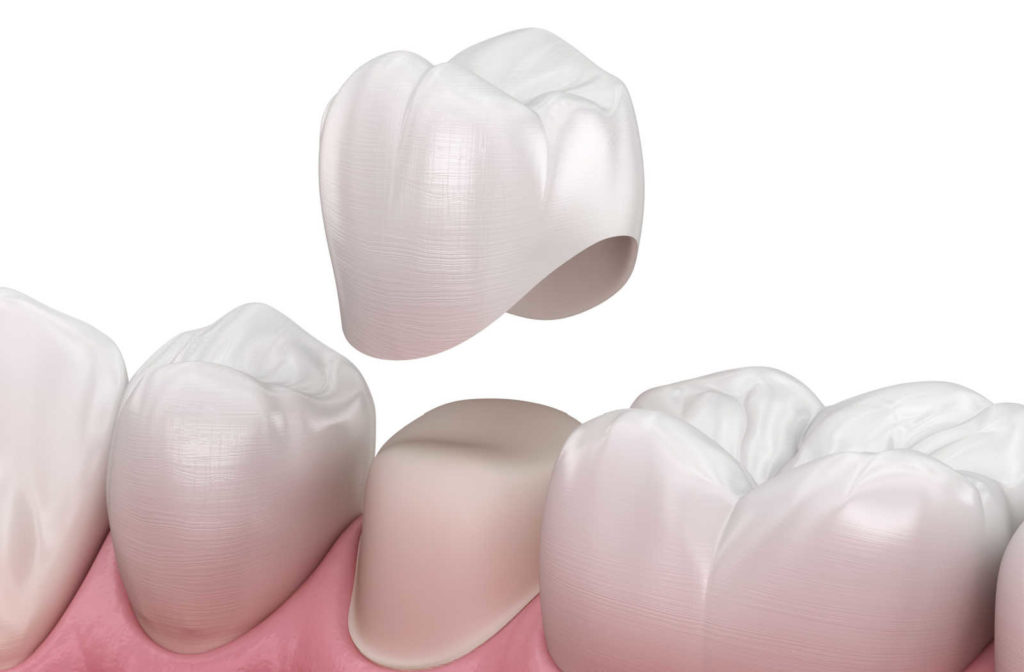
Damaged teeth don’t have to stand out. Crowns are tooth-shaped caps that can hide damage and restore strength and durability to a tooth. They can help restore a tooth’s function and support the appearance of your teeth.
Most dental crowns last between 10 to 15 years, but their lifespan depends on the material used, your oral hygiene habits, and how well you protect them from damage. Understanding what dental crowns are can help you make the right choices for maintaining them.
During your next dental exam, if your dentist recognizes the need for a crown, they will discuss your options with you and answer your questions about getting a crown customized to your teeth.
Why Is a Crown Needed?
Crowns are artificial caps measured to fit over existing teeth affected by decay or damage. When cemented in place, the crown covers the tooth all the way to the gum line for a natural look and feel.
Your dentist may recommend a crown for a variety of reasons, including:
- To protect a weak, decayed, or cracked tooth
- To restore a worn-down tooth
- To hold a dental bridge in place
- For a cosmetic fix
- To cover a misshapen or discoloured tooth
- As a follow-up to a root canal
What Are the Different Types of Crowns Available?
As you and your dentist discuss the different types of crowns available, they’ll make recommendations based on several factors, including:
- The location of the tooth
- The anticipated visibility of the crown when you smile
- How much natural tooth is intact
The durability and aesthetics of each material are also critical factors in deciding on your crown. Each type of crown may have a different lifespan, which is something to consider.
Metal Crowns
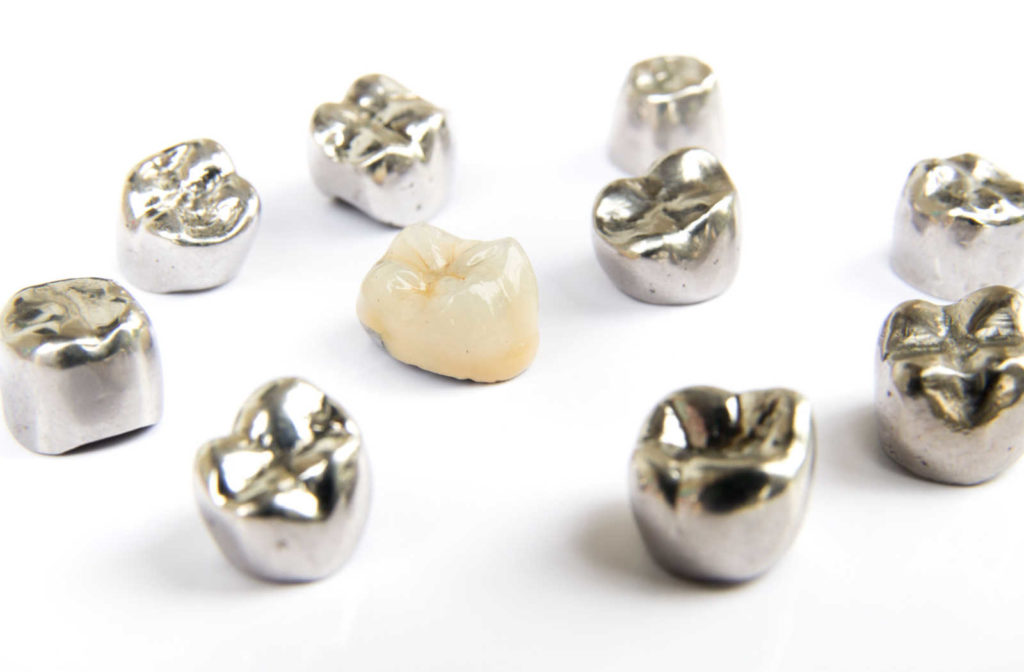
Gold is one of the longest-used materials in restorative dental care, and dentists still use gold with other mixed metals for crowns. Metals are highly durable and can withstand the high force of biting and chewing. Gold crowns rarely break or wear down, so they can last for decades.
The obvious drawback is the eye-catching nature of gold. It can look unnatural and is difficult to hide. Dentists often suggest metal crowns for out-of-sight molars and opt for more natural-looking materials for front teeth.
Composite Crowns
Composite crowns are a tooth-coloured, natural-looking option that can be more affordable but are not always as long-lasting. Compared to other crowns, they can wear down more easily through simple, daily habits like chewing and brushing. The polished surface can fade, leaving the material vulnerable to discolouration or staining.
Porcelain Crowns
With great colour-matching for teeth, porcelain crowns can be a natural-looking choice. Dentists can use them for front teeth because they don’t look artificial and are not strong enough for back molars or premolars. Porcelain is more brittle and is susceptible to chipping than metal.
Porcelain-Fused-to-Metal Crowns
For both the strength of metal and the natural look of porcelain, porcelain-fused-to-metal crowns offer an excellent choice. Your dentist can colour-match adjacent teeth when putting in these crowns, and they’re suitable for front or back teeth.
The outer porcelain layer can still be prone to chipping, but if you properly care for your crown, it can last 10-15 years.
What Your Crown’s Lifespan Depends On
Your crown’s longevity isn’t just about time — it’s about how you care for it and what it’s made from. The material your dentist chooses plays a huge role, with some lasting decades while others need replacement sooner.
Your daily habits matter just as much. How well you brush and floss around your crown, whether you grind your teeth at night, and what you eat all influence how long your crown stays strong and secure.
Signs Your Crown Needs Replacement
Your crown can usually give you warning signs before it fails completely. Pay attention to these symptoms that signal it’s time for a dental visit:
- Pain around the crowned tooth
- Crown feels loose or moves when chewing
- Visible gaps between crown and tooth
- Chips or cracks in the crown
- Food getting stuck around the crown
Don’t wait if you notice any of these issues. A loose or damaged crown can let bacteria reach your tooth underneath, leading to decay or infection. If you’re experiencing teeth grinding, this can also accelerate crown wear and damage.
Can a Tooth Rot Under a Crown?
Yes, your tooth can develop decay under a crown, especially if gaps form between the crown and your natural tooth. These tiny spaces become hiding spots for bacteria and food particles that your toothbrush can’t reach.
Poor oral hygiene around the crown also increases your risk. When plaque builds up at the crown’s edge, it can work its way underneath and attack the tooth structure. This is why regular dental checkups are so important — your dentist can catch these problems before they become serious.
How to Make Your Crown Last Longer
Daily Care Habits
- Brush 2-3 times daily
- Floss around the crown daily
- Use fluoride toothpaste
Treat your crown like your natural teeth when it comes to cleaning. Pay extra attention to where the crown meets your gum line — that’s where plaque loves to hide.
Protect Your Crown
- Avoid using teeth as tools
- Don’t chew ice or hard objects
- Consider a nightguard if you grind your teeth
- Visit your dentist every 6 months
Your crown is strong, but it’s not indestructible. Skip the hard candies and ice chewing, and never use your teeth to open packages or bottles. If you grind your teeth at night, a custom nightguard can help prevent crown wear.
Don’t wait for your crown to cause pain before scheduling a visit. Regular checkups every six months help catch small problems before they become expensive emergencies. The team can spot early signs of crown failure and monitor the health of the tooth underneath.
If you experience sudden pain, sensitivity, or notice your crown feels different when you bite down, contact Shawnessy Dental Centre right away. Quick action can often save your crown and prevent more complex treatment down the road.